The Gadget Desk
7 Reasons Your Phone Battery Is Quietly Dying Overnight — And the No-App Fix That Stops It
It turns out the fastest way to wear out your battery isn't how you use your phone all day. It's the hours it spends sitting at 100% while you sleep.
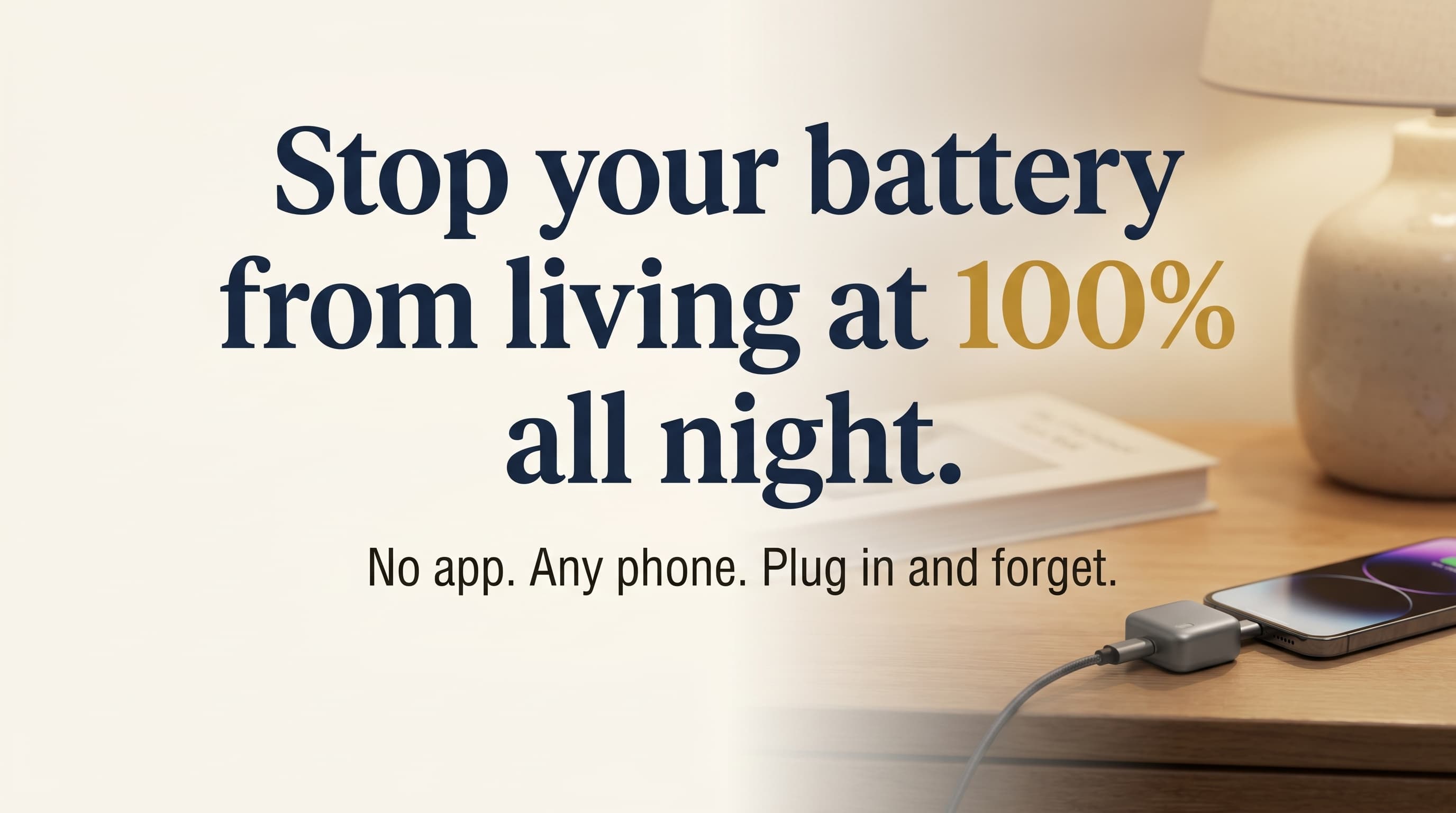
Your Battery Isn't Dying From Use — It's Dying While You Sleep
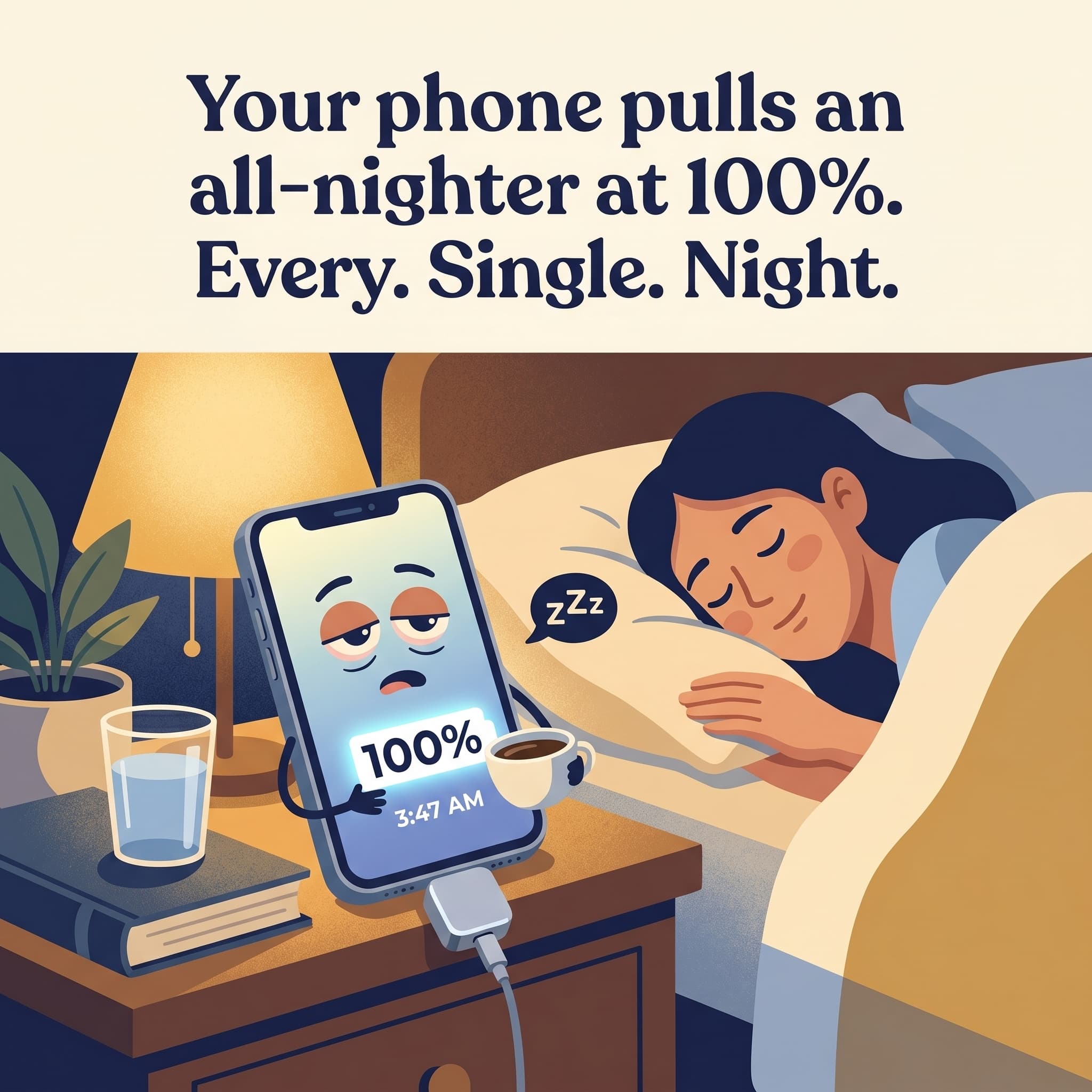
Most of us blame ourselves when the battery health number drops. Too many charges. I shouldn't charge overnight. I must be doing something wrong.
You're not.
The biggest thing wearing your battery down isn't how much you use your phone — it's how long it sits at a full 100%. Lithium-ion batteries age faster when they're held at peak charge, even when the phone is just lying there, untouched, on the nightstand. Battery specialists call this "calendar aging," and it happens whether you're scrolling at noon or sound asleep at 3 a.m.
Picture your real night. You plug in at 11. Your phone hits 100% by around 1 a.m. Then it sits there, completely full, for six, seven, eight hours until your alarm. Every night. We call it the Overnight 100% Hold — and for most people it's the single biggest source of battery wear they've never once thought about.
According to Battery University, a long-running battery-education resource, the less time a lithium cell spends parked at a high charge, the longer it holds its capacity. In other words: the problem was never you. It's the hours. That's the exact thing Aurisle ChargeGuard is built to end.
The Real Damage Happens Silently — Overnight
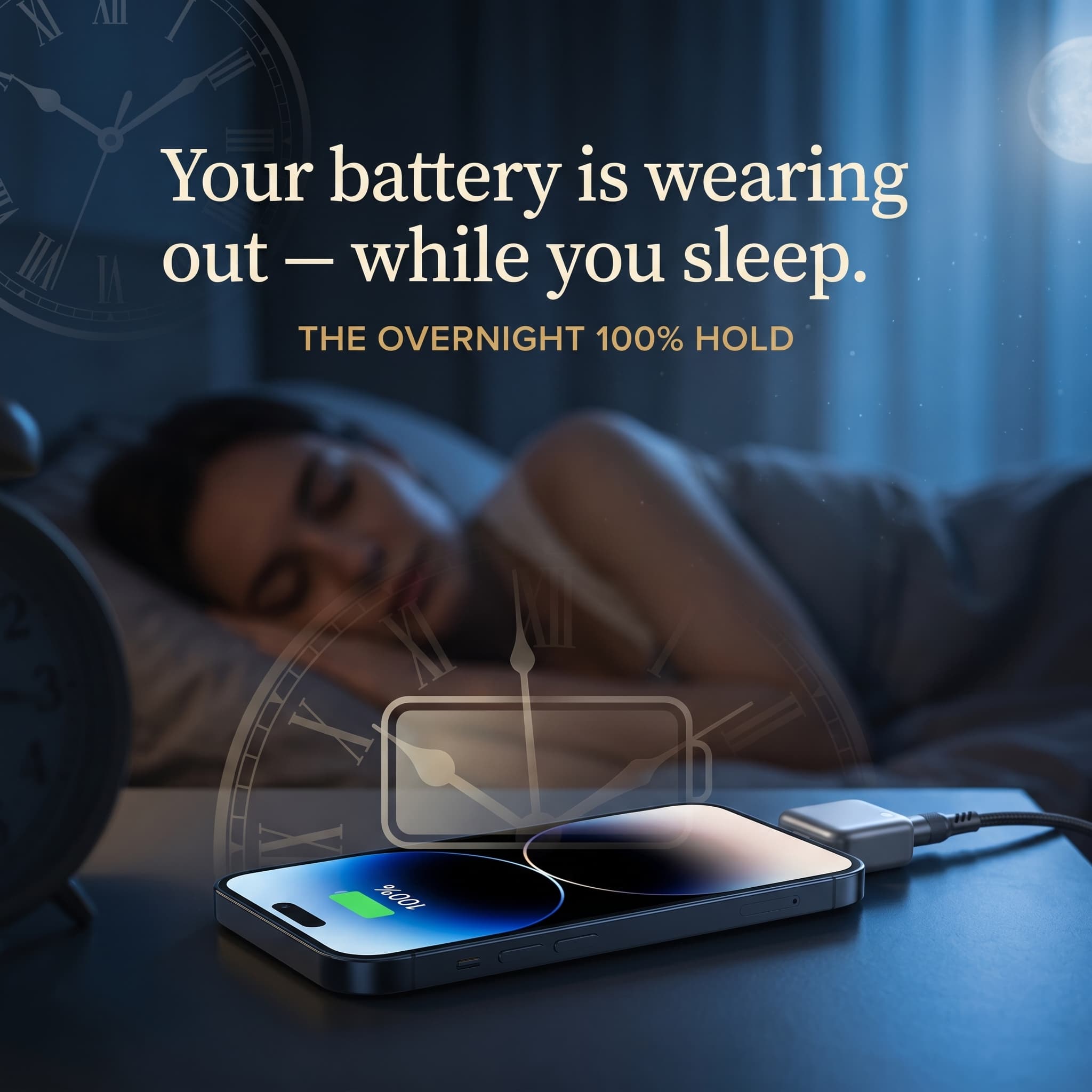
Here's what makes the Overnight 100% Hold so sneaky: you can't feel it happening.
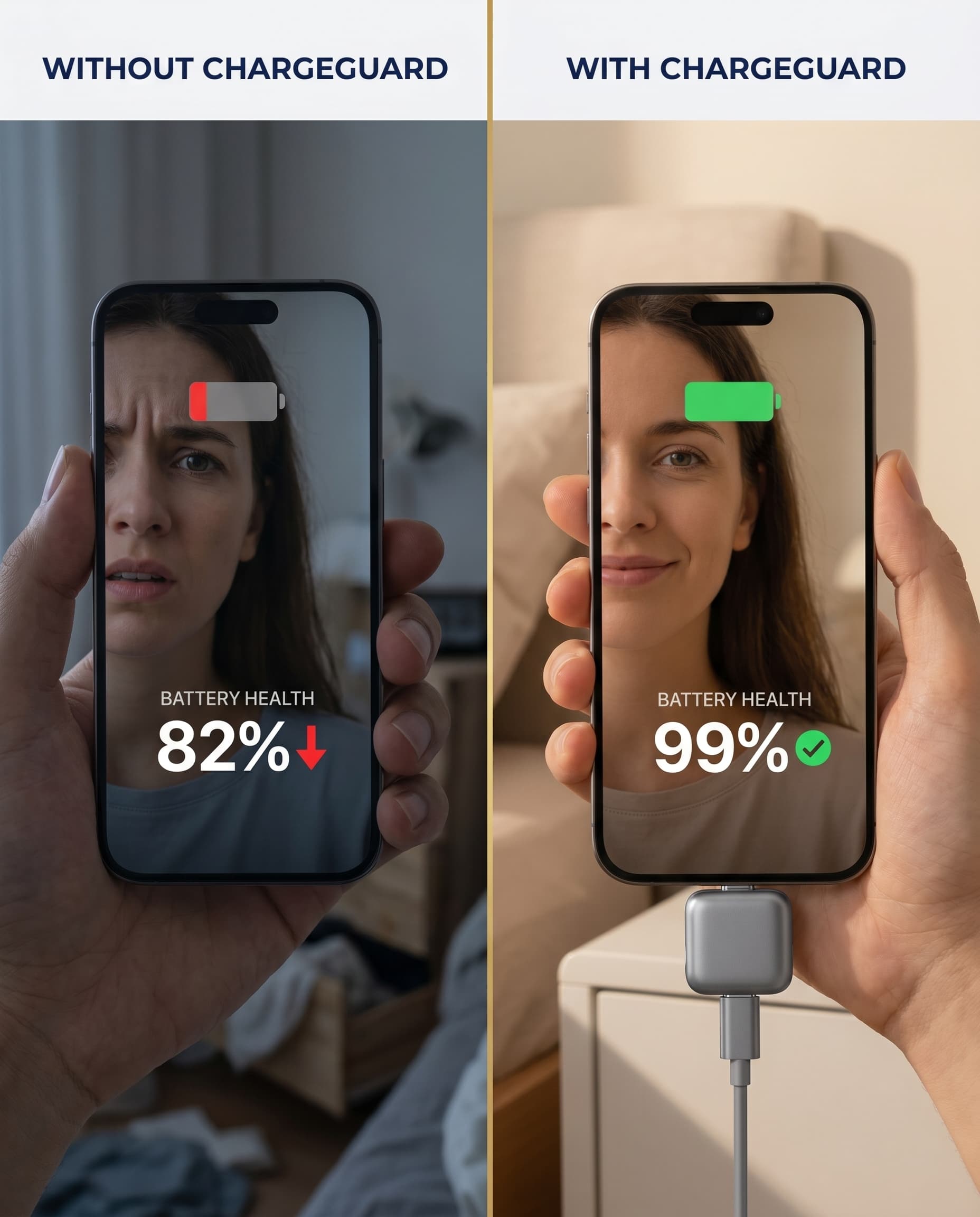
Every hour at a full 100% quietly chips a little off your battery's maximum capacity. No warning. Nothing dramatic. Then one day you open Settings, check Battery Health, and the number has dropped — and you have no idea when. If you've caught yourself almost dreading that screen, you're far from alone.
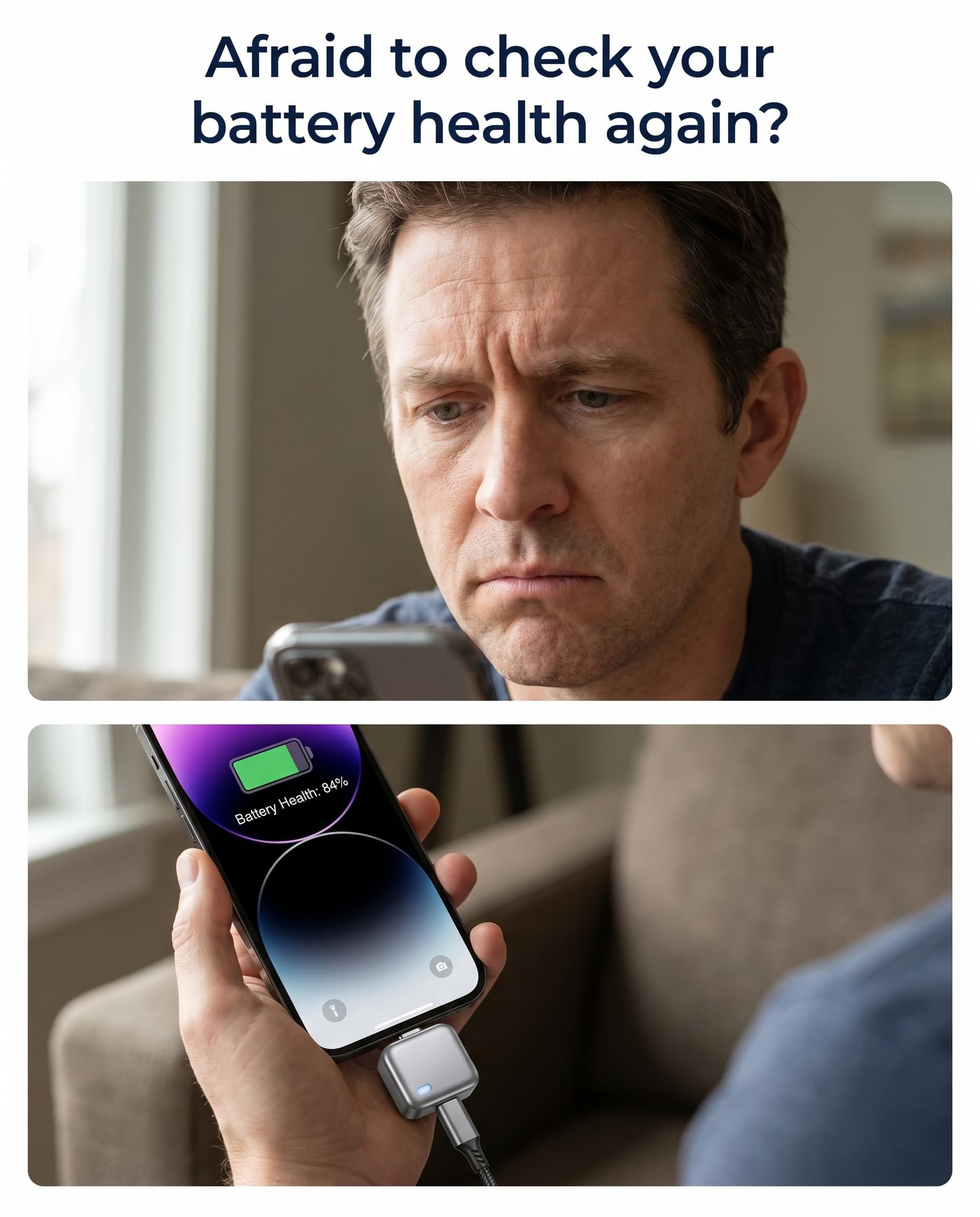
Left running night after night, the Overnight 100% Hold costs you in ways that stack up:
- ✕ Less screen time as months pass
- ✕ The battery-health % sliding down
- ✕ Reaching for the charger more often
- ✕ Being pushed into a new $1,000+ phone early
You did the responsible things. You shouldn't be the one paying for a problem the charging rules never addressed.
— B., Verified Buyer
Your Phone's "Smart" Charging Was Supposed to Stop This. Here's Why It Often Doesn't.
"But doesn't my phone already handle this?" Fair question — and worth answering honestly, because Apple and Samsung both added features meant to limit charging. They do help. When they actually run.
The catch is in the fine print. By Apple's own description, Optimized Battery Charging only kicks in after it spends about two weeks learning your routine, needs Location Services switched on, and won't engage when your schedule is unpredictable or when you travel. So the nights you're in a hotel, or your bedtime shifts, are often the exact nights your phone sits at 100% anyway — quietly, with no notice.
And the cleaner option — a hard charge limit that simply stops at 80% — isn't on most phones at all. It arrived on the iPhone 15, and a slice of newer Androids have a version of it. Older iPhones and the majority of Android phones don't have it, period.
So the built-in software isn't useless. It's a black box you can't fully count on — on a phone that may not even offer the better setting. That's a frustrating place to leave something you actually care about protecting.
Even the Phone Makers Agree: The Fix Is to Stop Sitting at 100%
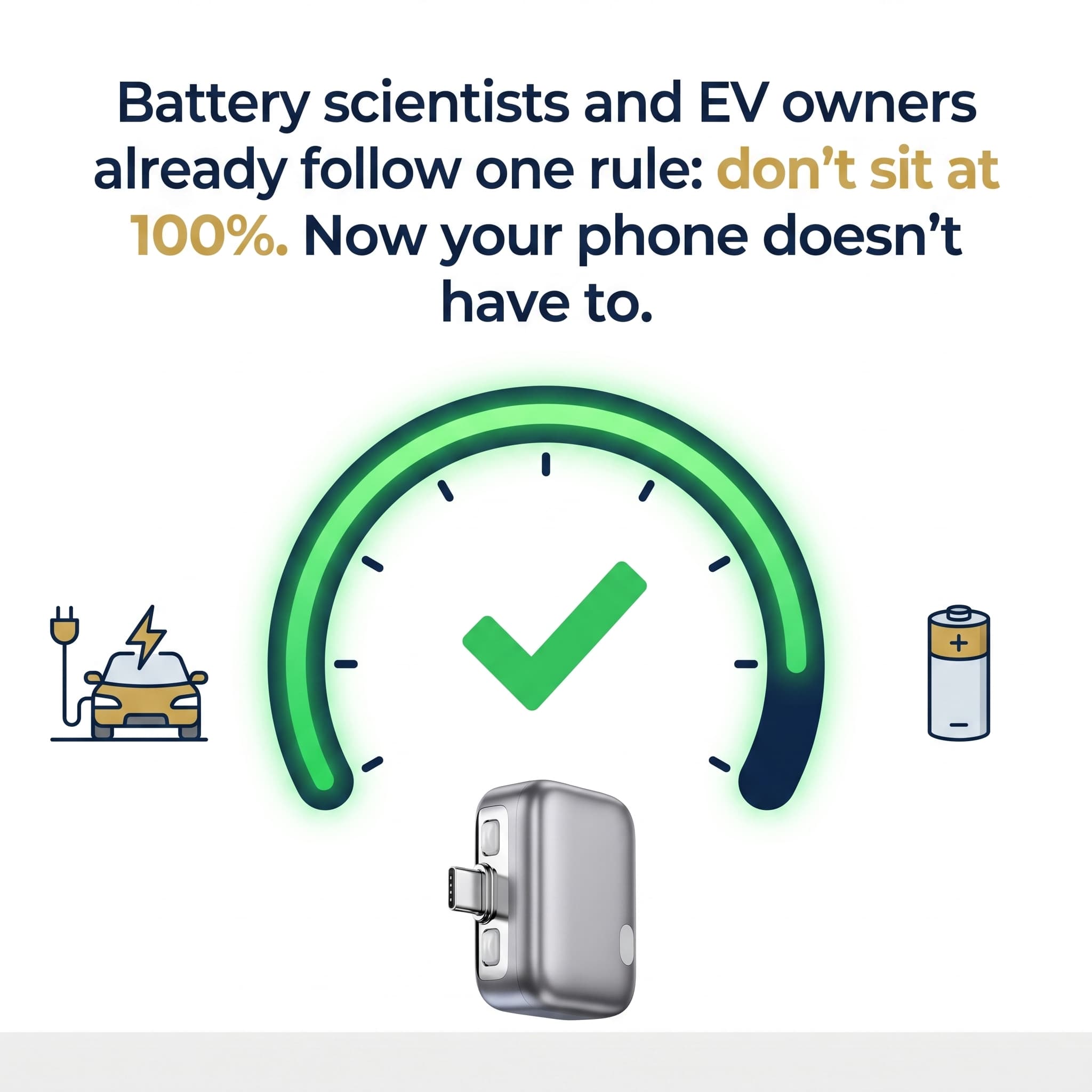
Here's the tell: the manufacturers agree with the whole premise.
The reason Apple and Samsung built those 80% limits in the first place is that sitting at a full charge wears a battery faster — they're trying to keep your phone off 100% for the very same reason we are. Battery University puts it plainly: charge a lithium battery to a lower ceiling and it lasts meaningfully longer. It's the same discipline serious EV owners already follow — they rarely charge the car to a full 100% unless they need every mile that day.
So the principle isn't in dispute. The only real question is whether it happens reliably, every single night — or whether it's left to software that may or may not decide to engage. That gap is exactly what a simple, physical auto-stop is built to close.
Meet the Fix: A Tiny Adapter That Physically Stops the Charge — No App, No Bluetooth
So if the principle is settled — keep the battery off a full 100% — then the only thing that actually matters is making that happen automatically, every night, without you having to think about it.
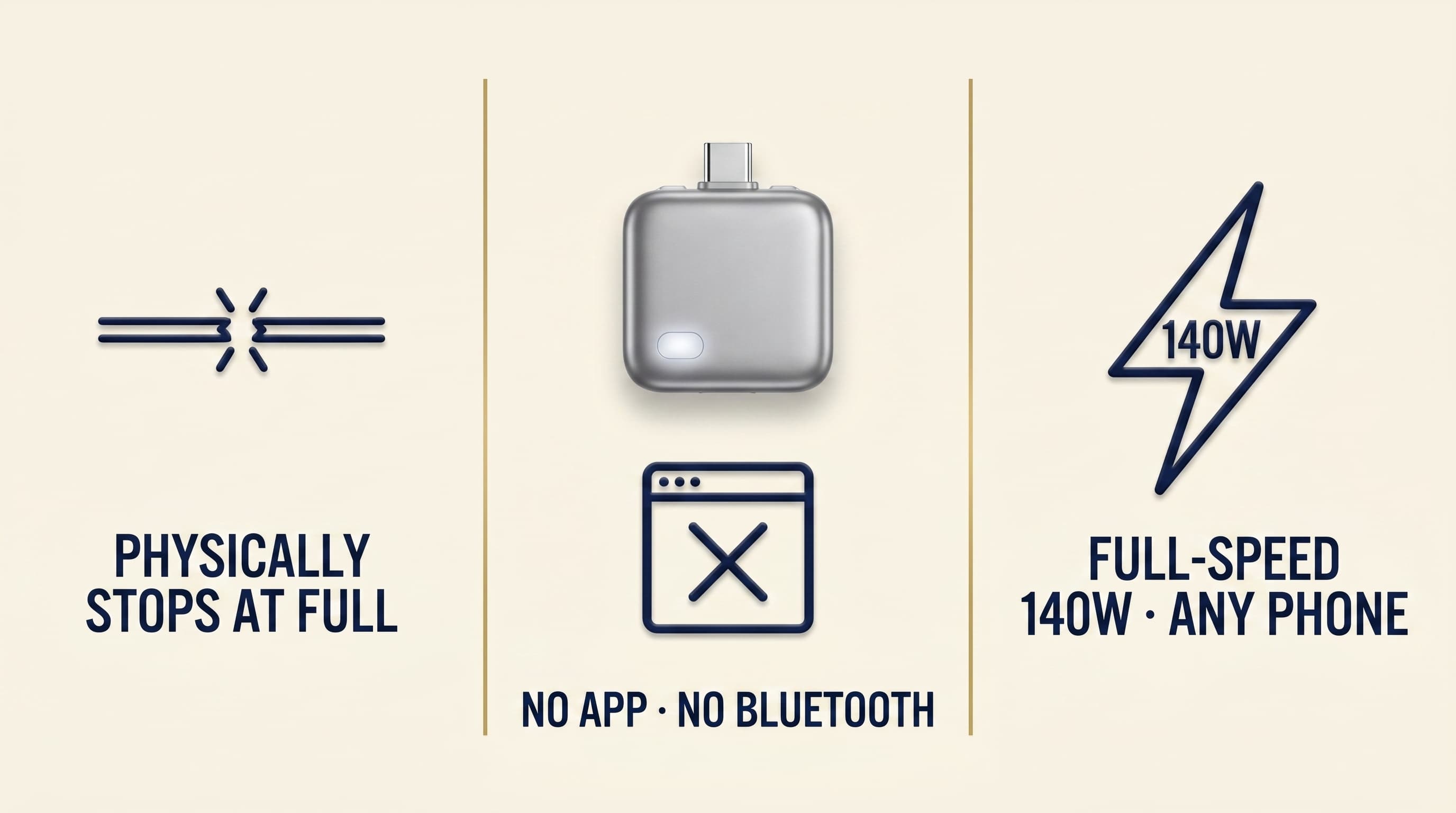
That's all ChargeGuard does. It's a small adapter that sits inline between your charger and your phone. It watches the charge, and the moment your phone is full, it physically stops the power. A real, mechanical cut-off — not a software suggestion that may or may not fire tonight.
And here's the part people love: there's nothing to set up. No app to install. No account. No Bluetooth to pair, and nothing to drop the connection at 2 a.m. You plug it in once, and it just works — on its own, in the background, while you sleep.
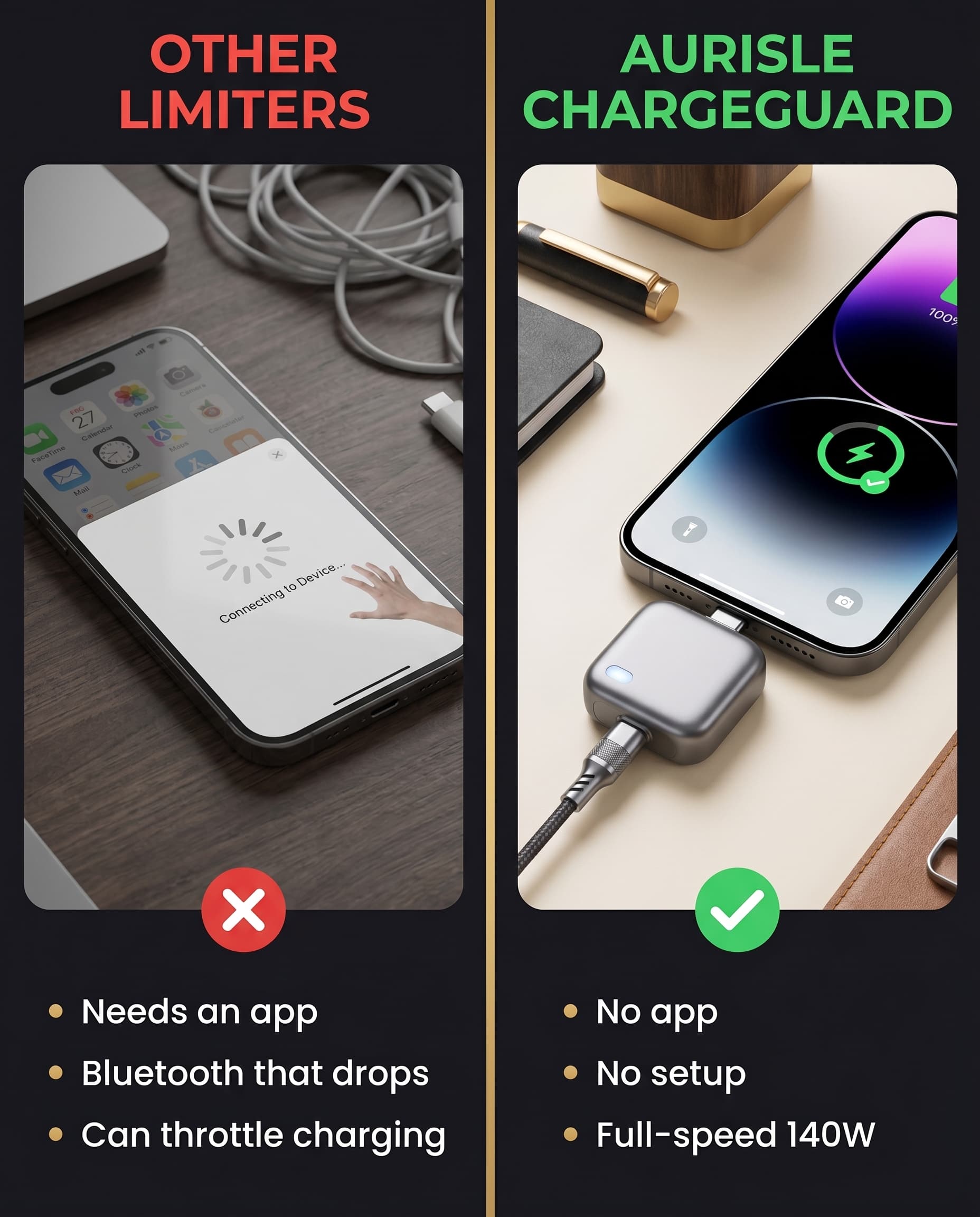
That's the whole difference from the app-based gadgets. If a "smart" charger needs a phone app running and syncing to do its job, that's one more thing to babysit — and one more thing that can quietly stop working without you noticing. ChargeGuard doesn't lean on your phone's software, your settings, or an app staying connected. It does its one job by itself.
Works on Any Phone — Without Choosing Between Battery Health and a Fast Charge
The two questions everyone asks: Will it work with my phone? And will it slow my charging down?
Works with your phone. ChargeGuard uses a standard USB-C connection, so it works across iPhone and Android alike — iPhone 15 and newer, Samsung Galaxy, Google Pixel, and the rest. One adapter now, and it carries over to whatever you upgrade to next.
Full-speed charging. It charges at full speed right up until the moment it cuts off — up to 140W, with PD 3.1, QC 5.0, and PPS all supported. It acts as a high-conductivity bridge, so your device charges at its normal rated speed until it reaches 100%; you're not trading a fast top-up for battery protection.
Nothing to babysit. Because there's no app and no settings to manage, there's nothing to forget. You don't have to remember to unplug at the right moment, or hope the software decides to engage tonight. Plug in, fall asleep, done.
Simple and safe. It works by cutting power when you're full — not by forcing more current into your phone — so it isn't running hot the way a charger does overnight, and the housing is molded from flame-retardant PC. It's CE-, FCC-, and RoHS-certified. If you ever need a full 100% before a long day, a quick press-to-reset (or re-plugging the cable) starts a fresh charge.
The Math That Makes It Obvious
Put the cost of protecting your battery next to the cost of not protecting it:
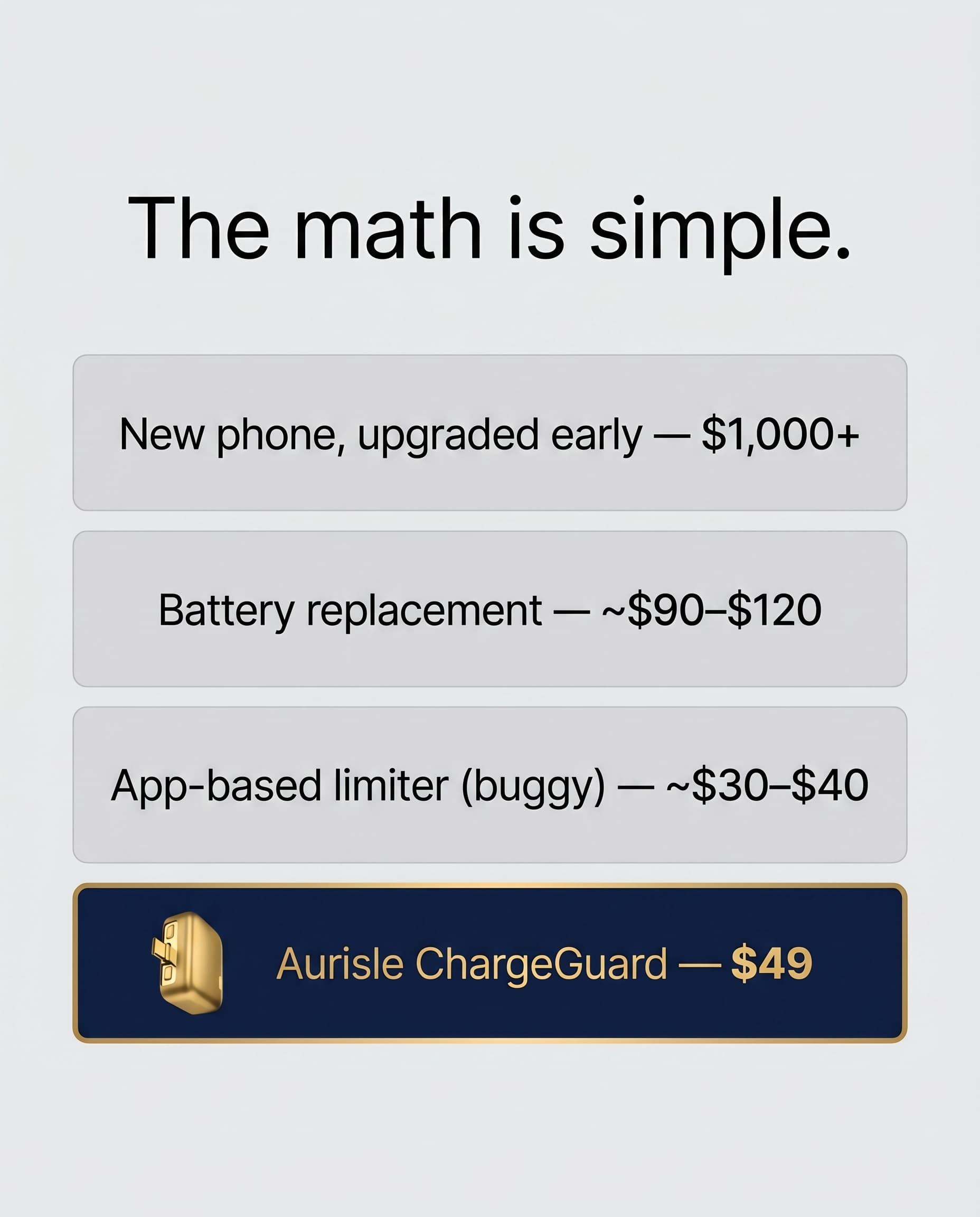
| A new flagship phone, upgraded early | $1,000+ |
| Out-of-warranty battery replacement | ~$90–$120 |
| An app-based charge limiter you have to babysit | ~$30–$40 |
| Aurisle ChargeGuard — any phone, no app, every night | $49 |
The phone in your pocket is worth far more than this adapter costs. Yes, a cheaper app-based limiter exists — but it's also the one people abandon once the app stops syncing. ChargeGuard is $49, needs nothing from you, and for most people it pays for itself the first time it spares a single premature battery swap.
And because it lives on your nightstand and runs on its own, it actually does the job — instead of being a good intention you forget about by week two.
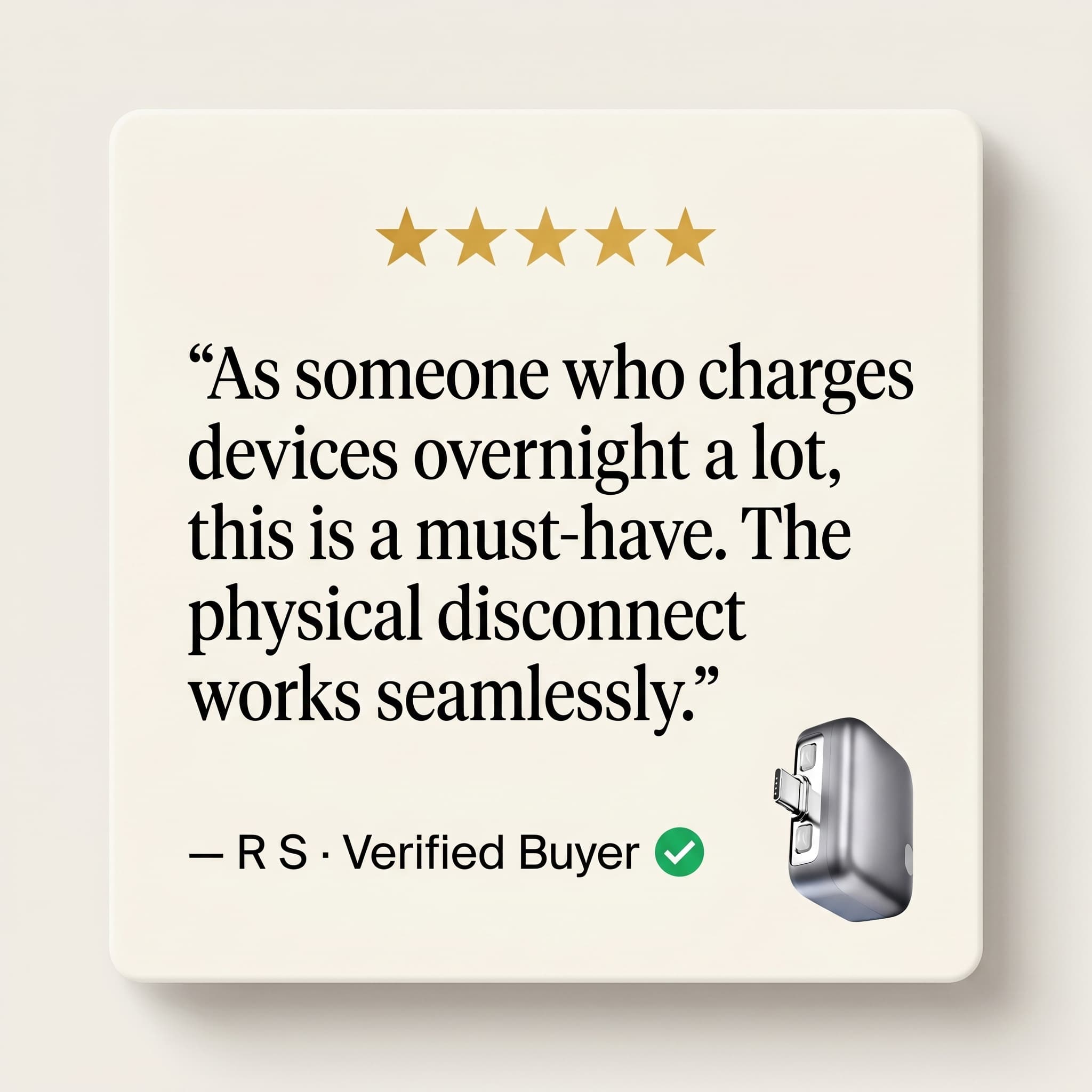
— C., Verified Buyer
— T., Verified Buyer
— L., Verified Buyer
Take Back Control of Your Battery
You did the responsible things. You shouldn't have to watch the number slide anyway — or get pushed toward a new phone before this one is actually finished. ChargeGuard gives you back the one thing the charging rules and the built-in software never could: a battery that isn't quietly aging at a full 100% every single night — on any phone, automatically, with nothing for you to manage. Plug it in tonight, and stop thinking about it.
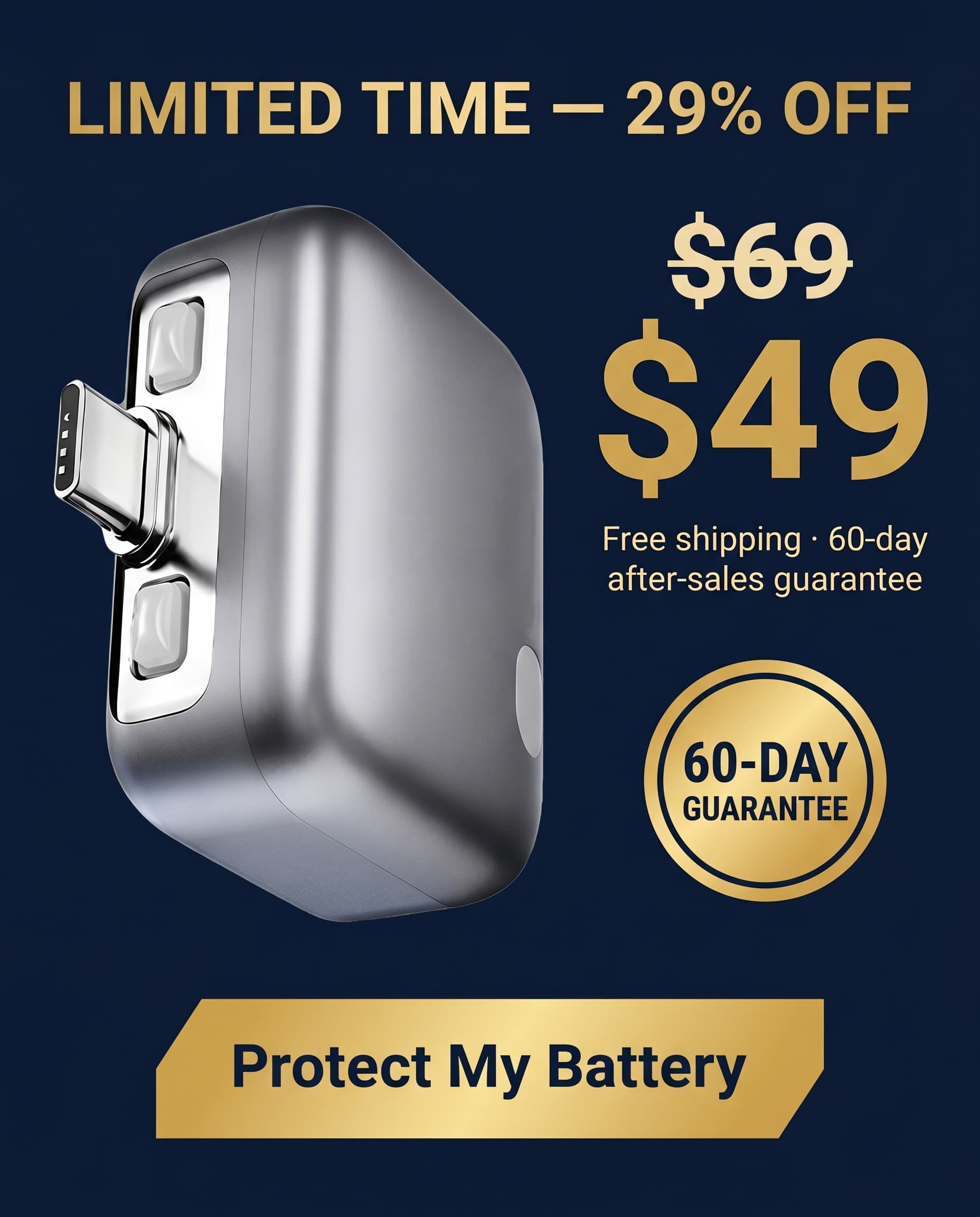
Aurisle ChargeGuard™ — Smart Auto-Stop Charging Adapter
- ✓ Physically stops the charge the moment your phone is full
- ✓ Ends the Overnight 100% Hold — automatically, every night
- ✓ No app, no Bluetooth, no setup — works on any USB-C phone (iPhone & Android)
- ✓ Full-speed charging up to 140W (PD 3.1 · QC 5.0 · PPS) until it cuts off
- ✓ Free shipping included
- ✓ 60-day after-sales guarantee — protect your battery or your money back
60-day after-sales guarantee. Try ChargeGuard on your own nightstand. If you don't love plugging in without a second thought, contact us within 60 days for a full refund. No forms. No hassle. No risk.